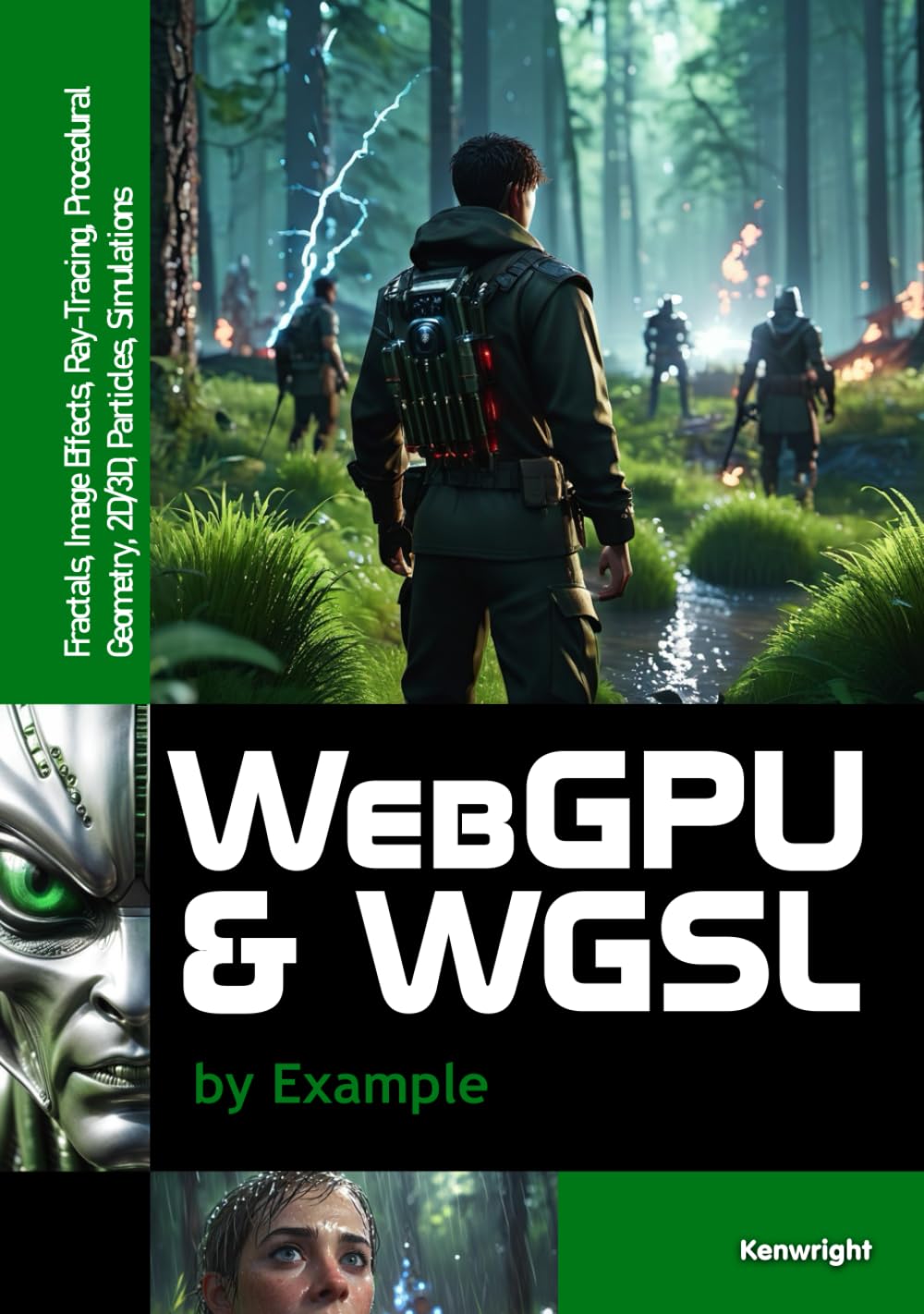
A innovative exploration of webgpu and its impact on the contemporary issues. This essential read offers fresh perspectives and practical insights that will transform your understanding.
Readers will appreciate the author's ability to weave storytelling with scholarly insight, creating a rich tapestry of knowledge that is both informative and engaging. Drawing inspiration from the challenges and triumphs within programming, the author crafts a compelling narrative that resonates with readers across diverse backgrounds. Whether you're seeking to deepen your understanding or simply explore new perspectives, "WebGPU and WGSL by Example: Fractals, Image Effects, Ray-Tracing, Procedural Geometry, 2D/3D, Particles, Simulations (Hardback)" offers a rewarding experience that lingers long after the final page. What sets this book apart is its ability to connect wgsl with real-world scenarios, providing readers with actionable insights they can immediately implement.
As someone who's been in the industry for 15 years, I found fresh perspectives and actionable insights on every page. Highly recommended for professionals.
I appreciated the balance between research and anecdotal evidence—it felt grounded and real.
I had the same experience. The practical exercises really helped solidify the concepts.
February 24, 2026
As someone who's been in the industry for 15 years, I found fresh perspectives and actionable insights on every page. Highly recommended for professionals.
I had the same experience. The practical exercises really helped solidify the concepts.
February 22, 2026Yes! I found the visual summaries at the end of each chapter incredibly helpful.
February 26, 2026Stay updated with the latest from the book world
Allegra Goodman's new novel is called This Is Not About Us, but critic Maureen Corrigan says that title is coy: Readers are bound to see aspects of th...
Read MoreJones' new novel, Kin, is set in 1950s Louisiana and Atlanta, and tells the story of two young women who grow up next door to each other without their...
Read MoreWhat does the Democratic leader see for himself in the years to come?...
Read MoreEnhance your reading and learning experience
Follow the 20-20-20 rule: every 20 minutes, look at something 20 feet away for 20 seconds.
Rubber Duck Debugging: explain your code line by line to an inanimate object.
Write documentation as if the next person reading it is a violent psychopath who knows where you live.
Use a pointer or your finger to guide your eyes. This can increase reading speed by 25%.
Organize books by color for visual appeal or by genre for practical access.
Take brief notes after each chapter. Summarizing helps cement knowledge.
Sarah Johnson
Professional ReviewerGreat point! I especially appreciated the chapter on implementation strategies.
February 20, 2026