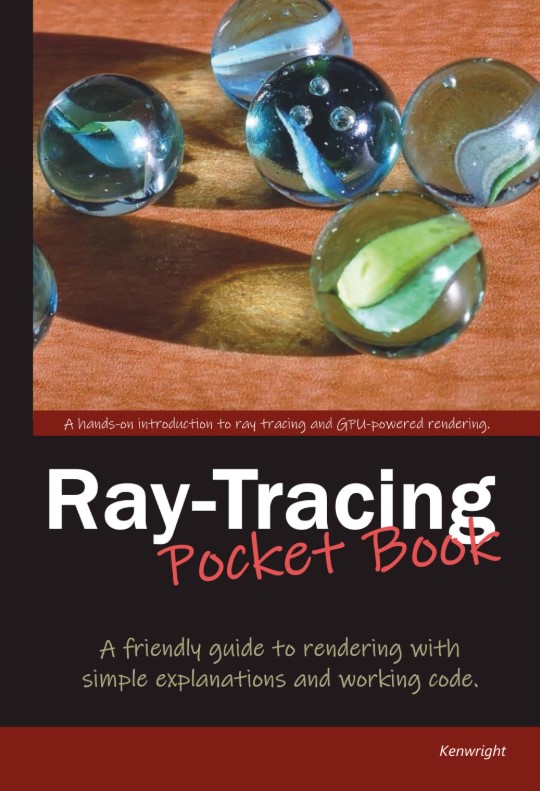
A innovative exploration of ray tracing and its impact on the modern technology. This essential read offers fresh perspectives and practical insights that will transform your understanding.
Readers will appreciate the author's ability to weave storytelling with scholarly insight, creating a rich tapestry of knowledge that is both informative and engaging. The carefully structured chapters build upon each other, creating a learning journey that is both educational and inspiring. Each section includes practical examples and thought-provoking exercises. Through meticulous research and engaging narrative, the author presents complex ideas in an accessible manner, making this book suitable for both beginners and experts in the field.
I've recommended this book to my entire team. The practical applications have already improved our workflow and outcomes.
I appreciated the balance between research and anecdotal evidence—it felt grounded and real.
Great point! I especially appreciated the chapter on implementation strategies.
April 6, 2026That insight on visual effects really stuck with me—so relevant to my work.
April 10, 2026
The depth of research is impressive, yet it never feels overwhelming.
I loved how the author used personal stories to illustrate key points.
April 7, 2026That section was brilliant. I've already applied those techniques with great success.
April 4, 2026Stay updated with the latest from the book world
Once called the "King of Bad Taste," Waters is known for his off-beat cult films Pink Flamingos and Polyester, as well as the more mainstream Hairspra...
Read MoreThe annual Whiting Award for Emerging Writers comes with $50,000 to support each winner's work. It's one of the largest prizes granted to promising ne...
Read MoreHarvard professor Namwali Serpell has been teaching Morrison for nearly two decades. Her book, On Morrison is a deep dive into the Nobel winner's comp...
Read MoreEnhance your reading and learning experience
Write documentation as if the next person reading it is a violent psychopath who knows where you live.
Organize books by color for visual appeal or by genre for practical access.
Use a pointer or your finger to guide your eyes. This can increase reading speed by 25%.
Use the Feynman Technique: teach what you learn to someone else to identify knowledge gaps.
Rubber Duck Debugging: explain your code line by line to an inanimate object.
Follow the 20-20-20 rule: every 20 minutes, look at something 20 feet away for 20 seconds.
Sarah Johnson
Professional ReviewerThat insight on visual effects really stuck with me—so relevant to my work.
April 14, 2026